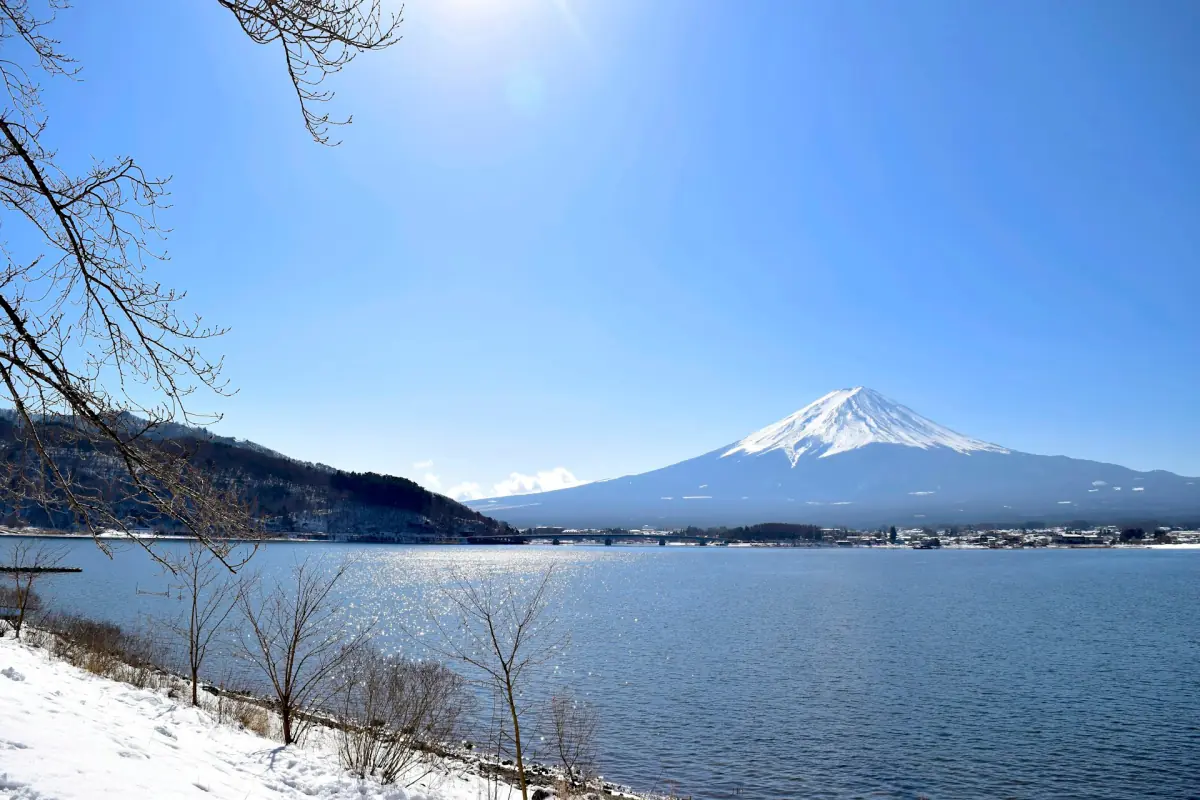
Reading Kawaguchiko weather for a lake visit
Kawaguchiko weather should be judged at lake level, rather than from conditions at the summit of Mount Fuji. The table on this page uses the Japan Meteorological Agency's Kawaguchiko station, number 47640, and the 1991 to 2020 normal period. It describes the local climate across many years. For a particular day, use a current forecast and the operating information for your chosen activity before setting out.
The highest and lowest temperature columns are monthly averages of daily maximum and minimum temperatures. They are not the hottest and coldest temperatures ever recorded in those months. Rainfall is the average monthly precipitation total. These distinctions matter when packing: a particular path may be wet and the mountain may be hidden even in a month with lower average rainfall.

Monthly climate at Kawaguchiko
JMA normals for 1991 to 2020 are shown in degrees Celsius and millimetres. The station represents Kawaguchiko, not the summit station on Mount Fuji. Read across the row for the month you are considering, then use the practical sections below to decide how much outdoor activity to build into the day.
| Month | Mean daily maximum °C | Mean daily minimum °C | Precipitation mm |
|---|---|---|---|
| January | 5.5 | −5.7 | 60.9 |
| February | 6.6 | −4.8 | 55.4 |
| March | 10.5 | −1.3 | 107.6 |
| April | 16.1 | 3.7 | 106.1 |
| May | 20.6 | 8.9 | 123.2 |
| June | 23.0 | 13.7 | 157.1 |
| July | 27.2 | 18.0 | 178.4 |
| August | 28.1 | 18.5 | 176.8 |
| September | 23.8 | 14.8 | 264.7 |
| October | 18.3 | 8.7 | 230.0 |
| November | 13.8 | 2.2 | 76.0 |
| December | 8.5 | −2.9 | 49.8 |
August has the highest average daily maximum temperature in this record. September has the largest average precipitation total, and December the smallest. That comparison helps with broad seasonal decisions; it does not give the number of rainy days or the chance of an unobstructed Fuji view. For blossom, autumn leaves and festival timing, continue to the season guide.
Cycling around the weather
A day rental lets you plan your ride within the rental opening hours.
Hand-picked tours, booked through Viator. Prices are indicative starting prices in US dollars (as of October 2026). Tap a tour for live availability and the current price in your currency.

Independent bicycle hire for a suitable lake day
A day rental includes a basic lock and a bicycle subject to availability, for use from 09:30 to 17:30. Choose it around the day's weather and return within those hours.
Cold mornings, frost and clothing layers
Winter average minimum temperatures fall below freezing, and the climate record also shows a below-zero average minimum in March. Pack layers that allow you to change between walking and standing beside the water. A warmer daytime average does not settle the condition of a shaded path. If you encounter snow or ice, change the route and activity to suit the conditions rather than relying on a summer description of the shoreline.
Keep the return part of the day in mind when dressing. Clothing comfortable for an active walk may feel different while waiting for transport or pausing to look across the water. The climate table is useful for selecting what to bring, while the current forecast is the useful tool for deciding which layers to carry out that day.
Rain and a route that can change
Rain protection belongs in an outdoor plan, particularly when using the wetter monthly averages as a guide. Keep belongings protected and choose a route that can be shortened. Avoid attaching every stop to a single clear-weather photograph. A lake view, an indoor cultural visit and a shorter walk can form separate parts of the day, with transport considered between them. The things-to-do guide outlines the local cultural choices.
Wind, the ropeway and time on the water
Wind, thunderstorms, snow and ice can affect the panoramic ropeway. Its short ride time does not account for the queue or changing operation. Boat activities also need a weather decision. Follow the operating instructions for the activity you choose and retain an alternative that stays on land. Use the current operating information when deciding on either activity for a particular afternoon.
When bicycle hire fits the conditions
The rental offered here is an independent bicycle rental with a basic lock. Use is between 09:30 and 17:30, with return during that window. The bicycles are 20-inch or 26-inch models subject to availability. Choose a distance that leaves time to return, and judge the road surface before riding. This is a day rental, with your own route, rather than a guided ride. Snow and ice require a fresh decision about whether to cycle at all. The cycling guide compares rental with guided options.
Weather questions
Does the table show today's weather?
It shows JMA climate averages for 1991 to 2020. Use a current forecast for the day of your visit, alongside the ropeway or boat operating information where relevant.
Can a dry month guarantee a mountain view?
Visibility depends on clouds and conditions during the visit. Use average precipitation to compare months, then judge visibility according to the conditions during your visit.
How should I decide about cycling in winter?
Choose cycling according to the actual weather and surface conditions. The rental window defines when the bicycle is used and returned; it does not establish suitability on snow or ice.