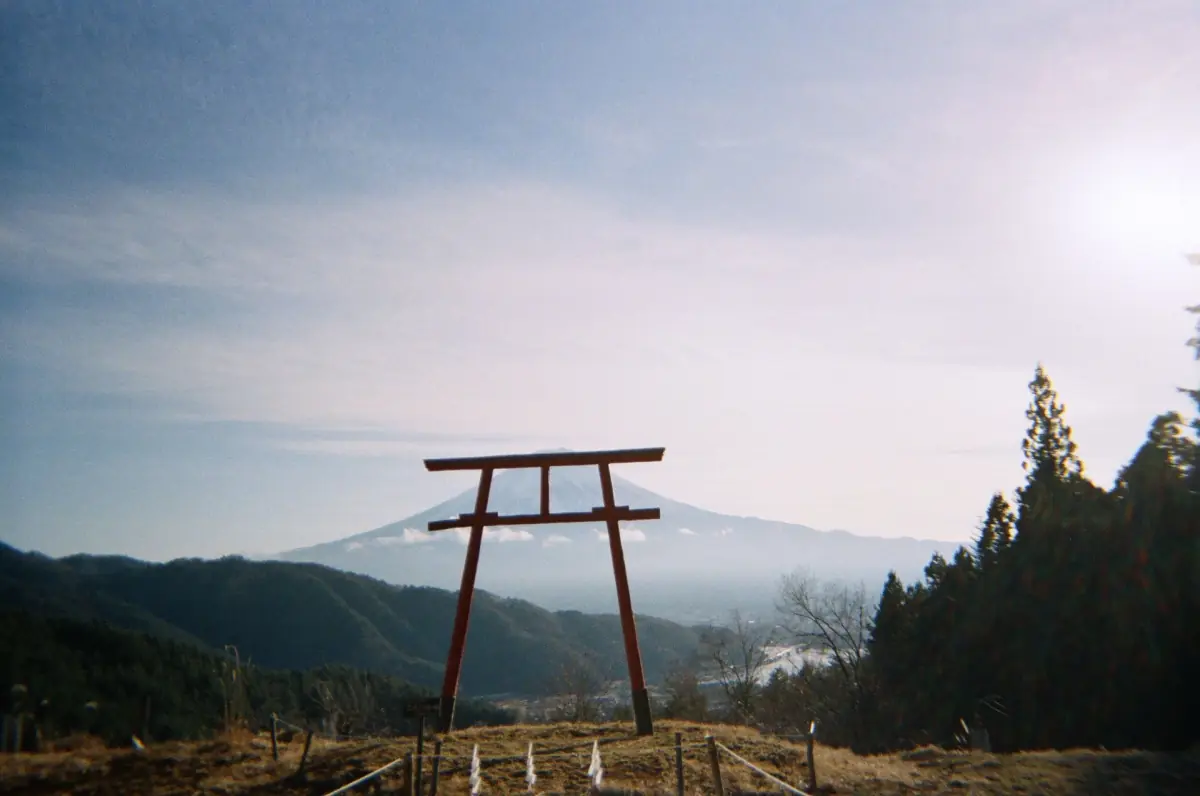
Lake Kawaguchi history begins with a different reading of the shore
Lake Kawaguchi history reaches beyond the familiar mountain panorama. The lake was historically known as Funatsuko, and Funatsu referred to a boat landing place. Fuji-ko pilgrims travelled over the Misaka Pass and performed water purification at the lakeside. Knowing that background gives the shore another meaning: it was part of a journey shaped by religious practice, rather than simply a place to pause for a view.
Today Lake Kawaguchi is in Yamanashi, within the municipality of Fujikawaguchiko. The lake and the town are different things, and their names do not identify every shrine in the wider area. Start with the lake overview to orient yourself, then use the historical names here to connect places without treating them as a single sacred site.

Funatsuko, Funatsu and the Misaka Pass
The historical account of Fuji-ko pilgrims links the Misaka Pass with the lake and its landing place. It describes purification in the water at Funatsu. Treat this as an account of past religious practice when looking at the lakeshore. It is not an instruction to enter the water today or a ready-made ritual for visitors to repeat. The useful connection is between movement through the landscape and the meaning attached to the lake.
Funatsu is now the southern-shore area with the station and road access. Kawaguchi has museums and visitor facilities, while Azagawa on the eastern shore is associated with ryokan and hotels. Those present-day areas help with orientation, but an efficient modern transport route need not reproduce a historical pilgrimage. Choose the places you want to understand first, then connect them with the transport guide.
A flexible private excursion
Agree a shrine stop in advance when arranging this flexible private route.
Hand-picked tours, booked through GetYourGuide. Prices are indicative starting prices in US dollars (as of October 2026). Tap a tour for live availability and the current price in your currency.

A local private drive with an agreed shrine route
A flexible 3 to 4 hour private outing includes a guide, air-conditioned vehicle and local pickup and drop-off in the Fuji Five Lakes area. Entrance fees and meals are extra; agree the shrine stops as part of the route.
Kawaguchi Asama and its foundation tradition
Kawaguchi Asama Shrine's own tradition dates its foundation to 865, following the eruption of 864. It venerates Asama Okami, also identified with Konohanasakuya-hime. Presenting the foundation as shrine tradition preserves the character of the account. The local reading Asama is also useful when distinguishing this site from other shrines whose names visitors encounter around Mount Fuji.
Kawaguchi Asama, Kitaguchi Hongu and Arakura Fuji Sengen Shrine are distinct places. A route description mentioning a Sengen shrine should therefore be matched to the actual stop. For the flexible private drive offered here, agree the desired shrine and lake stops in advance; Kawaguchi Asama is not a fixed stop promised by that product. The private-tours guide explains how local outings differ from departures in Tokyo.
Fujisan as a cultural World Heritage landscape
Fujisan was inscribed on the UNESCO World Heritage List in 2013 with 25 component parts. Its cultural significance brings together sacred places and artistic inspiration. Pilgrimage routes, shrines, pilgrims' accommodation and natural features belong to that larger account. This helps explain why a lake, a route and a shrine can be connected in meaning while remaining separate places to visit.
Read the landscape as a set of relationships rather than expecting a single monument to tell the whole story. The mountain's presence in a woodblock print and its place in religious journeys are different ways of understanding the same wider setting. An attractive view can be part of a cultural visit, even when the itinerary does not involve climbing the mountain.
Arakura and Chureito belong to a separate stop
The Chureito Pagoda stands in Fujiyoshida at Arakurayama Sengen Park. It is a symbolic memorial, and the approach includes 398 steps. Keep this stop separate from the Kawaguchi lakeshore and from Kawaguchi Asama Shrine. Include the climb and onward travel in your plan rather than treating the pagoda photograph as an adjacent lakeside scene.
History questions
What does Funatsuko refer to?
It is a historical name for Lake Kawaguchi. Funatsu referred to a boat landing, connected in the pilgrimage account with purification in the lake's water.
Was Kawaguchi Asama founded after an eruption?
The shrine's own foundation tradition gives 865, following the eruption of 864. That attribution matters when reading the account as part of the shrine's history.
Does the private drive include Kawaguchi Asama?
The outing has a flexible route. Arrange the specific shrine stop as part of that route, with entrance fees and meals paid separately. Local pickup and drop-off are included.